Astrobiology & SETI

The Fermi Paradox

"But where is everybody?"

— Enrico Fermi, 1950

What Is the Fermi Paradox?

The Fermi Paradox is the discrepancy between the lack of clear, conclusive evidence of extraterrestrial life and the apparently high likelihood that it exists.

The paradox arises from the combination of two key arguments: the sheer scale of the universe suggests intelligent life should be common, yet we have found no proof that such life has ever existed anywhere except Earth.

200B+
Stars in the Milky Way
70 sextillion
Stars in observable universe
13.8B
Years since the Big Bang
0
Confirmed alien contacts
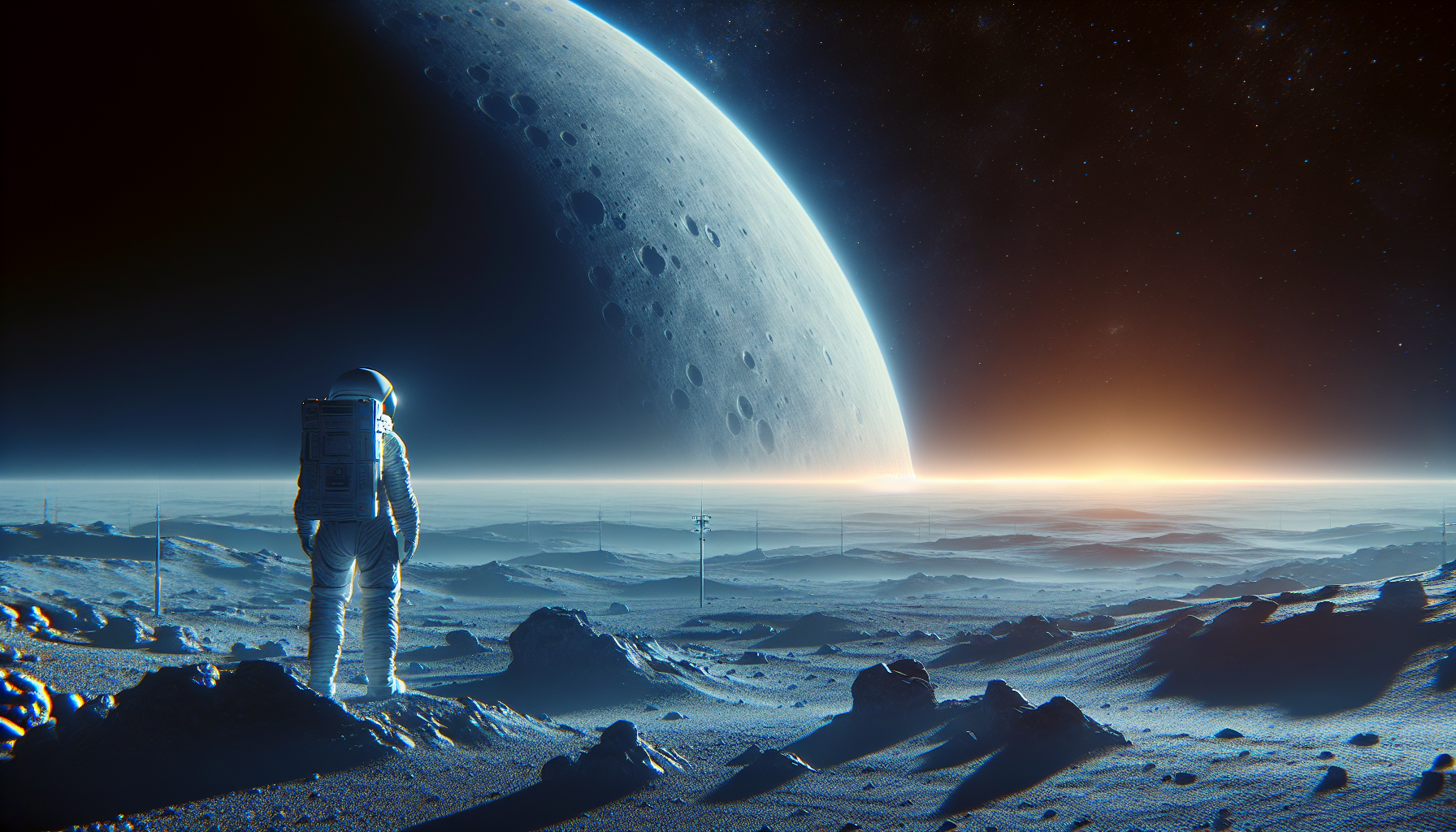
Astronaut alone in space

A Brief History

The paradox has roots predating Fermi's famous question by centuries.

1686

Fontenelle's Question

Bernard Le Bovier de Fontenelle posed the question in "Conversations on the Plurality of Worlds," noting that if intelligent beings existed on the Moon, "they would have already come to us before now."

1950

Fermi's Famous Question

During a lunch conversation at Los Alamos with Edward Teller, Herbert York, and Emil Konopinski, Enrico Fermi suddenly asked: "But where is everybody?" The question became the cornerstone of the modern paradox.

1963

First Print Reference

Carl Sagan mentioned the paradox in a footnote of a paper, bringing academic attention to the topic.

1975

Named & Formalized

Michael Hart published a detailed examination, and David Stephenson coined the term "Fermi Paradox." The paradox entered mainstream scientific discourse.

Why Should We Have Been Visited?

Two powerful arguments combine to create the paradox.

🌌

Scale Argument

With 200–400 billion stars in our galaxy alone, and billions of years of cosmic history, intelligent life should have emerged many times over.

🚀

Probability Argument

Even at slow interstellar travel speeds, a civilization could colonize the entire galaxy in just 5–50 million years—a blink in cosmic time.

📡

No Evidence

Despite decades of searching (SETI), listening for radio signals, and scanning the skies, we have found nothing—no signals, no artifacts, no traces.

The Contradiction

If intelligent life is likely and would spread, why do we see absolutely no evidence of it? Something doesn't add up.

Possible Solutions

Scientists have proposed many explanations. Here are some of the most compelling.

They're Rare

Rare Earth Hypothesis

Perhaps intelligent life is extraordinarily uncommon. Earth may be one of the first—or the only—planets to develop complex life. The conditions for intelligent life may require an extremely unlikely combination of factors: the right star type, the right orbital position, a large moon for stability, plate tectonics, a protective gas giant, and years of evolutionary luck.

This doesn't mean we're alone in the universe, but that truly intelligent, technological civilizations may be separated by millions of light-years and immense time spans.

They're Gone

The Great Filter

Perhaps there's a catastrophic "filter" that prevents civilizations from reaching interstellar travel. This filter could be behind us (we've already passed it) or ahead of us (and we're heading toward it).

If the filter is ahead, it could be nuclear war, climate catastrophe, AI apocalypse, or some unknown cosmic disaster. The silence we observe might be the graveyard of countless civilizations that failed to survive their own technological adolescence.

They're Hiding

The Dark Forest Theory

In a cosmic "dark forest," intelligent civilizations stay silent to avoid being detected and destroyed. Like predators in a forest at night, the safe strategy is to never reveal your location.

Any civilization that broadcasts its presence loudly is immediately targeted by others who cannot take the risk of being discovered. This creates a universe of complete silence—not because no one exists, but because survival depends on secrecy.

They're Watching

The Zoo Hypothesis

Perhaps advanced civilizations exist but have agreed to a non-interference protocol, leaving Earth and humanity to develop naturally—like a wildlife preserve or a zoo.

First proposed by Soviet rocket scientist Konstantin Tsiolkovsky in 1933, this theory suggests we're being observed by species far more advanced than us who have chosen to keep their existence hidden from us, perhaps to protect our independent cultural development.

Alternatively, we may have been "visited" long ago and their artifacts or probes are so advanced they're indistinguishable from natural phenomena.

The Search Continues

With new telescopes, expanding SETI programs, and the discovery of thousands of exoplanets, we continue to search for answers to Fermi's simple but profound question.

← Back to home

Model attribution unavailable (pre-April 2026)